
12 Creative Ways to Transform Bare Walls Without Paint

When we need to decide on wall decorations, our instinct is often to reach for a paint swatch. Yet paint is only one of many ways to give a space personality, and sometimes it isn’t even the best option. No matter if you’re renting, avoiding the hassle of repainting, or simply craving a more textured, dimensional, or dynamic aesthetic, there are countless ways to reinvent a wall without ever picking up a brush. The modern home is increasingly defined by layers, materials, tactility, and the interplay between décor and architecture. That means blank walls offer an opportunity to play and add this dimension to your home. Below are twelve inventive, design-forward strategies for transforming bare walls, each adaptable to different styles and budgets, and all capable of elevating a room from ordinary to extraordinary.
Use Oversized Art to Anchor the Room
A single large-scale artwork can reshape a space with minimal effort. Oversized canvas pieces, mixed-media panels, and sculptural wall hangings draw the eye upward and outward, making walls appear taller and rooms feel more expansive. They can also introduce color, contrast, and mood without the commitment of painting. Choosing a piece with bold geometry can energize a minimalist room, while soft, atmospheric abstracts create an elegant, serene backdrop. For maximal impact, lean an enormous canvas against the wall instead of hanging it; the casual placement adds a contemporary, gallery-inspired feel.
Oversized art looks especially well in spaces with open floor plans, high ceilings, or awkward corners that need visual grounding. The key is scale: embracing something dramatically large gives a wall immediate purpose and presence.
Install Decorative Wall Panels for Texture
If you crave dimension, decorative wall panels offer endless possibilities. Think fluted wood slats, upholstered fabric tiles, 3D gypsum panels, or sculpted resin modules that create shadows and interplay with natural light. Panels can be mounted over existing walls with minimal intrusion and removed with care – ideal for renters.
Wood panels add warmth and architectural detail, while geometric plaster or resin designs can feel sleek and contemporary. For a softer look, upholstered panels bring texture and acoustic benefits, making them perfect for bedrooms, media rooms, or home offices. Layering panels across an entire wall creates a statement feature, but arranging them in a partial installation can also be striking.

Introduce a Mosaic or Art Installation
For a bold, artistic statement, create a wall installation that acts as a permanent visual anchor. This can take many forms: sculptural arrangements, ceramic clusters, geometric compositions, or a subtle yet intricate mosaic wall that adds captivating detail without relying on paint. These artistic applications work beautifully in entryways, bathrooms, or dining rooms where a sense of drama is welcome.
A more contained approach is to use framed mosaic artwork as a focal piece. Its intricate patterns, colors, and textures introduce visual richness while remaining easy to replace or rearrange. Whether large or small, these art forms bring craftsmanship and character to a space.
Installations that play with shadow, dimension, and reflectivity turn walls into experiential surfaces rather than flat backgrounds.
Create a Floor-to-Ceiling Gallery Wall
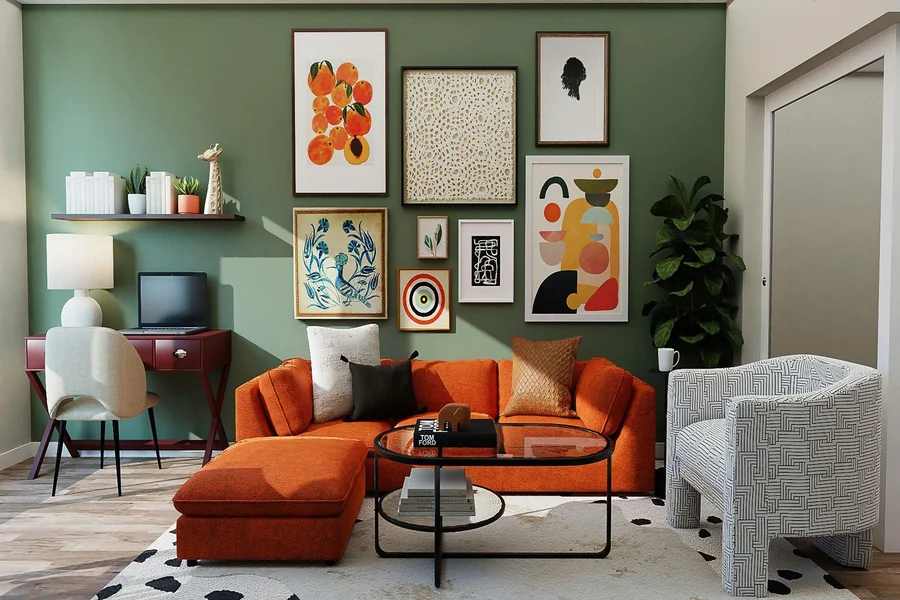
Gallery walls remain popular for good reason: they turn personal collections into an artistic narrative. While the concept is classic, the most compelling gallery walls often mix mediums: photography with drawings, vintage posters with textiles, modern prints with sculptural objects. Curating pieces of different sizes and formats adds rhythm and depth.
Instead of keeping frames in a neat grid, consider a more organic, salon-style arrangement that scales from floor to ceiling. This approach can make even the simplest pieces feel expressive and deliberate. Black-and-white works lend sophistication, while eclectic, colorful combinations bring energy. Using consistent frame styles creates cohesion, but a mix of woods and metals can introduce a textured, lived-in charm.
A gallery wall is particularly effective in transitional spaces such as hallways or staircases, where architecture naturally guides the eye.
Introduce Sculptural Lighting as Wall Art
Lighting doesn’t have to be functional alone, it can also be sculptural. Wall sconces, LED strips, and illuminated art objects can add dimension and mood while taking the pressure off paint to provide color. Modern sconce designs range from delicate, branching brass forms that double as jewelry for your walls to minimalist discs and rods that create architectural lines.
Light-based décor is especially transformative at night, turning a simple wall into a warm, atmospheric focal point. Consider asymmetrical placement for a contemporary look, or install multiple sculptural fixtures in a vertical arrangement to elongate a space. For renters, plug-in sconces with elegant cords and cable covers offer flexibility without electrical work.
Hang a Tapestry or Textiles for Soft Impact
Textiles can bring instant warmth, movement, and softness to a room. Wall-hung tapestries, vintage kilims, woven wall rugs, and contemporary fiber artworks introduce patterns and textures that paint simply can’t achieve. They also help with acoustics, reducing echo in rooms with high ceilings or hard flooring.
For a modern approach, opt for large, monochromatic weavings or minimalist fabric panels that read like sculptural art. In more eclectic or bohemian spaces, intricate, colorful textiles add richness and global appeal. Mounting textiles with sleek rods or tension bars keeps the look tailored and intentional.
Unlike framed artwork, textiles introduce a tactile element that softens rigid architectural lines, making them ideal for bedrooms, living rooms, or reading nooks.
Add Floating Shelves for Functional Style
Floating shelves turn walls into hybrid storage–display zones, solving practical needs while adding aesthetic interest. A series of minimalist shelves can host books, ceramics, plants, or personal mementos that shift with the seasons. This modularity lets you update a wall without permanent changes.
Floating shelves work well as standalone accents or as full shelving systems. Arranging them in an asymmetric pattern creates a dynamic composition, while clean horizontal lines bring structure to a room. For extra drama, use extra-thick shelves or sculptural brackets that contribute to the design rather than blend into it.
A well-styled set of shelves is an evolving canvas, allowing you to curate new moods over time.
Use Mirrors to Expand and Brighten
Mirrors are among the most effective paint-free tools for redefining a space. They bounce natural light, expand sightlines, and amplify architectural elements. A large, dramatic mirror leaning against the wall feels editorial and adds vertical dimension. Multiple smaller mirrors arranged in a grid or eclectic cluster can act as a modern alternative to framed art.
Antique mirrors bring patina and character, while ultra-contemporary frameless designs feel sleek and airy. For narrow hallways or smaller rooms, mirrors can create the illusion of openness. For more theatrical impact, consider placing a mirror opposite a beautiful window, plant display, or sculptural piece to reflect a curated vignette.
This approach doesn’t just decorate a wall; it changes the way the entire room functions.
Incorporate Natural Elements for Organic Warmth
Bringing nature indoors is a timeless design strategy, and walls are an ideal canvas for organic materials. Installing branches, driftwood pieces, botanical specimens, or mounted stone formations injects a sense of grounded beauty. These elements help balance sleek, modern interiors and add contrast to industrial spaces.
One of the most impactful approaches is a vertical plant display using mounted planters, wall vases, or simple ledges. Living greenery softens harsh lines and adds a serene, biophilic focus. For low-maintenance spaces, preserved moss panels or dried botanical arrangements offer texture without upkeep.
Using natural materials ensures the wall feels tactile, warm, and connected to the outdoors.
Experiment with Peel-and-Stick Architectural Details
Removable materials have evolved far beyond their early days. Peel-and-stick wood planks, faux stone panels, textured films, and metallic decals now provide surprisingly sophisticated alternatives to permanent renovation. These can mimic the depth and character of architectural details without committing to construction or paint.
Wood-look planks add rustic warmth; metallic patterns create glam accents; matte geometric decals introduce modern structure. Best of all, they’re renter-friendly and easy to swap out when your style evolves.
Use a Statement Headboard or Furniture-Integrated Wall Accent
In bedrooms, the wall behind the bed is one of the most influential visual zones. Instead of painting it, consider extending the headboard beyond the width of the bed, allowing it to act as a wall feature in its own right. Upholstered panels, rattan screens, reclaimed wood boards, or leather-wrapped sections introduce luxurious texture and scale.
Similarly, built-in or tall freestanding furniture, such as bookcases, wardrobes, or modular storage systems, can turn a bare wall into a sculptural architectural moment. The structure becomes the decoration, eliminating the need for paint entirely.
This strategy is especially effective in minimalist interiors where color is sparingly used but texture and form play starring roles.
Layer Architectural Elements for Depth
Sometimes the best wall transformations come from subtle architectural layering rather than overt decoration. Think thin molding strips arranged in modern geometric patterns, decorative trims applied in linear grids, or ribbed panels installed in vertical or diagonal layouts. These elements produce depth and sophistication without introducing color.
The interplay of light and shadow adds quiet drama, especially in rooms with good natural lighting. While the traditional application of molding suggests classic design, modern interpretations: thin, minimalist lines; asymmetrical compositions; monochromatic finishes offer a fresh, contemporary twist.
Because these elements rely on form rather than hue, they’re ideal for spaces where you want visual interest without overwhelming the existing palette.
The Beauty of Transformation Without Paint
Reimagining a blank wall doesn’t require a single drop of paint. Today’s design landscape is rich with materials, textures, and creative strategies that can redefine a room in sculptural, artful, or architectural ways. Whether your aesthetic leans minimalist, eclectic, rustic, or ultra-modern, the right approach can turn a once-empty surface into a defining element of your home.
By embracing panels, textiles, lighting, installations, and other tactile details, you create a space that feels layered and intentional. These paint-free solutions not only beautify walls but also influence the mood, acoustics, and spatial perception of a room. Ultimately, the most successful transformations come from choosing materials and artworks that resonate with your personal style while enhancing the structural elegance of your home.