
Is Cardboard Safe for Rabbits? Safe Chewing and Play
Being naturally curious animals and having an inborn urge to chew and munch, rabbits are constantly prone to chewing on any within reach. Such actions are useful for keeping their teeth in good condition because the teeth of these animals keep growing and get worn out regularly. However, among many things, rabbit owners keep in mind that cardboard comes at the top of the list for safe chewing. But the question remains: Is Cardboard Safe for Rabbits? This article will discuss the advantages and hazards of using cardboard as the chew material. The types of cardboard proper for rabbits, such as substitute notepads and rabbit toys, are also considered.
Cardboard for Chewing
Rabbits need to gnaw or chew on something to express their natural gnawing behavior; therefore, chewing cardboard serves as a source of gratification to the rabbits. The roughly textured cardboard meets the need to grind teeth, through which they get mental stimulation. Rabbits love tearing and shredding cardboard, and can imitate natural behaviors of digging and foraging. Cardboard is also lightweight and is manipulable. Thus, the rabbits can throw it around and play with it, proving to be a great enrichment tool.
Not all cardboards are made equal. It is very important that the chosen cardboard be plain and untreated and should not contain any inks, glue, or chemicals. This will ensure that it is safe for rabbits to chew and eat in small quantities.

Toilet Paper Rolls
One of the favorite cardboard products that rabbits are presented with is the empty toilet paper roll. These rolls make great chew toys because they are also in good shape and size. Rabbits can pick them up, chew on them, and throw them, so they exercise their body and mind. Moreover, toilet paper rolls stuffed either with hay or small treats promote natural foraging behaviour.
Consult the toilet paper rolls to ensure that they are not contaminated by printed inks or glue residues, among other things. The plain, unaided rolls are the safest to use and can be easily located in one’s home; therefore, they are cheap toys.
Cardboard Boxes
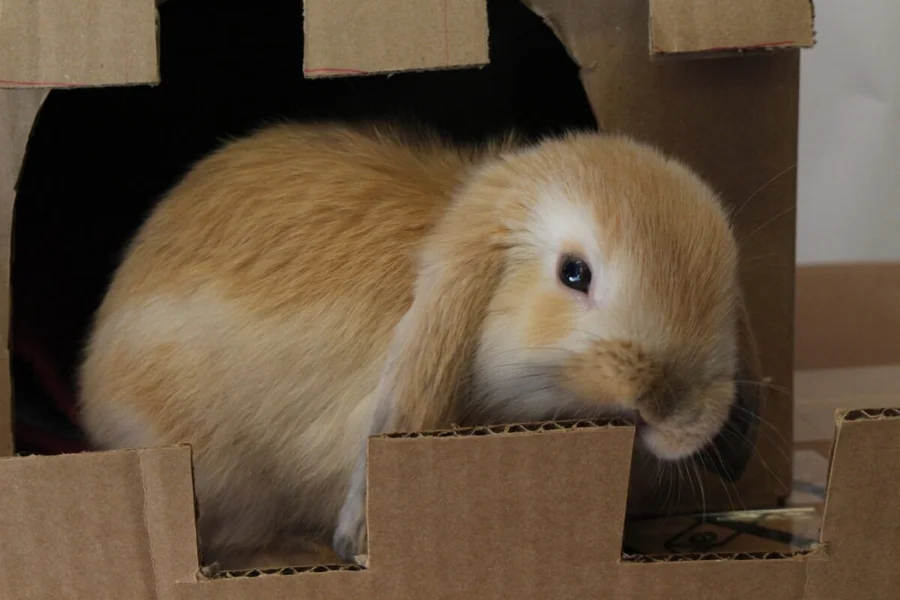
The bigger the cardboard boxes, the better they provide rabbits with double benefits. They are convenient, rather cozy hiding places that satisfy rabbits’ instinctual need for a hideout, and at the same time, they are chewable objects. It is common to see rabbits shredding cardboard boxes’ edges and surfaces. This is a good way of filing their teeth and keeping them in good shape, and it is also enriching.
The cardboard boxes you choose should not have staples, tape, stickers, or glossy finishes. It is critical to remove these potentially harmful substances prior to letting your rabbit in. Cutting doors or windows can also make boxes more attractive as hideouts.
Cleaning Up the Mess
Although cardboard is a perfect enrichment, it will create shredded debris that may be spread about your rabbit’s living space. Such a mess needs to be cleaned regularly to keep the surroundings clean. Storage of cardboard bits may cover rabbit droppings, making it difficult to observe their condition.
To control this, it would be good to provide a particular place for kids to play with cardboard, preferably with easy clean-up options like mats, newspaper, and so forth. Regular harvesting of shredded cardboard will not lead to overconsumption, and the enclosure will be clean all the time.
When Is Cardboard Dangerous?
Although this is a good idea, there are variations of it where cardboard may pose a threat to rabbits. If inks, dyes, add-ons, glossy finishes, adhesives, staples, or tape are on it, cardboard can carry toxic substances or be in physical danger. These contaminants can cause digestive upset or injury if consumed.
Also, unregulated consumption of cardboard, even clean cardboard, can lead to digestive complications like blockages and slowing of gut motility. Rabbits’ feeding should be mainly fiber from hay and fresh greens, which is the natural diet for rabbits, while cardboard is not nutritious. Overconsuming cardboard will interfere with their digestive health.
Always thoroughly inspect your cardboard and supervise your rabbit whenever he or she is chewing to reduce danger.
Glossy or Colored Cardboard
Glossy or painted cardboard usually has chemical coverings or printed inks that are harmful to rabbits. These can be heavy metals, solvents, or other toxic compounds that can affect your rabbit’s digestive tract or general health.
The cardboard with bright colors, shiny coatings, or even printed logos must not be so close. Instead, it is best to keep a safe distance from such cardboards. Curbing and enrichment should be based on plain, brown, uncoated cardboard.

Also Read: Indoor Rabbit Hutch: Best Cage for House Rabbits
Eating Too Much Cardboard
Although mild cardboard chewing is not a hazard, consuming too much may have serious effects on one’s health. Overconsumption of cardboard may obstruct the digestive tract or lead to gastrointestinal stasis, characterized by the slowing or halting of the gut’s movement.
Digestive distress exhibits symptoms that include reduced appetite, decreased fecal output, lethargy, and discomfort. If any of the above indications are noted, seek veterinary attention immediately. To reduce overconsumption, provide cardboard as a watched treat, not a free-for-all.
What Other Paper Can Your Rabbit Play With?
Apart from cardboards, there are a few other paper products that rabbits may find safe and fun to chew and play with if they do not contain toxic inks and coatings.
Newspaper
Newspapers without pictures or colours can be used in the cage as bedding or shredded as an enrichment. Avoid glossy-colored or advertising-loaded sections, as they contain poisonous inks. Newspapers supply clients with a soft texture for shredding and can imitate nature’s digging behavior.
Packing Paper
Plain unbleached packing paper, such as brown kraft packing paper, is safe and rabbits find it comfortable to chew and shred it. It has a slightly different texture relative to cardboard, which adds to the variety of your rabbit’s environment.
Shredded Paper
Shredded plain papers are one of the best substrates for nesting or digging. Rabbits love to push and burrow in shredded paper, promoting their natural behaviors and preventing laziness.
Other Great Chew Toys for Rabbits
Although cardboard and paper are some of the most commonly used veterinary chew toys, it is necessary to include other toys that would play their role in providing your rabbit’s dental and mental health. Durable, safe alternatives include chew toys like untreated hardwood blocks, wool, willow balls, and woven wreaths. Hay cubes and compressed edible blocks facilitate chewing and provide fiber.
Bamboo sticks and commercial rabbit-safe chew toys that can be purchased especially for gnawing also provide an excellent enrichment opportunity. Rotating the toys often is a good practice to ensure your rabbit does not get bored and develop destructive chewing habits.